Complete Guide to High Bay Lighting for Warehouses
What Is High Bay Lighting?
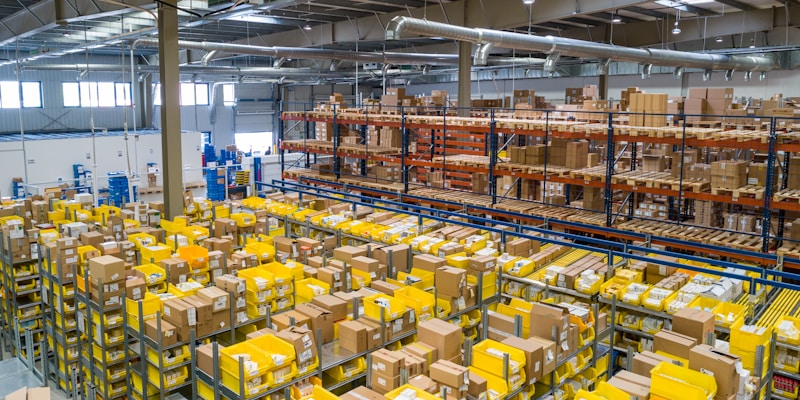
High bay lighting is a category of industrial light fixtures designed for spaces with ceiling heights of 15 feet or more. You will find them in warehouses, distribution centers, manufacturing plants, gymnasiums, big-box retail stores, and airplane hangars. These fixtures produce extremely high lumen output and are engineered to project light effectively over long distances from ceiling to floor.
Choosing the right high bay lights can dramatically improve visibility, safety, and energy efficiency in your facility. This guide covers everything you need to know.

LED vs Traditional High Bay
Traditional high bay fixtures used metal halide (MH) or high-pressure sodium (HPS) lamps. These technologies have significant drawbacks: they take 15-30 minutes to warm up, lose brightness rapidly over their lifespan, and consume substantially more energy than LED alternatives.
Modern LED high bay fixtures offer:
- Instant on: Full brightness immediately, no warm-up period
- 50-70% energy savings compared to MH/HPS equivalents
- 50,000-100,000 hour lifespan vs 15,000-20,000 for MH
- Better light quality: Higher CRI and more uniform distribution
- Reduced maintenance: Fewer replacements mean less downtime and less labor cost for hard-to-reach fixtures
Choosing the Right Wattage and Lumens
The wattage you need depends primarily on your ceiling height and the desired light level (measured in foot-candles). Here are general guidelines:
| Ceiling Height | LED Wattage | Approximate Lumens |
|---|---|---|
| 15-20 feet | 100-150W | 13,000-20,000 lm |
| 20-30 feet | 150-200W | 20,000-28,000 lm |
| 30-40 feet | 200-300W | 28,000-42,000 lm |
| 40+ feet | 300-500W | 42,000-70,000 lm |
For reference, OSHA recommends a minimum of 5 foot-candles for general warehouse aisles and 10 foot-candles for active work areas. Many facilities target 30-50 foot-candles for optimal productivity.

Beam Angles for High Bay
High bay fixtures come in different beam angles to suit different layouts:
- 60-degree beam: Concentrated light, ideal for narrow aisles in racking systems
- 90-degree beam: Medium spread, good general-purpose option
- 120-degree beam: Wide spread, best for open floor plans and large open areas
Many high bay fixtures come with interchangeable reflectors so you can adjust the beam angle to match your space. For aisle lighting in racking warehouses, 60-degree fixtures spaced along the aisle center provide focused, glare-free illumination between the racks.
Mounting Styles
Pendant Mount
Suspended from the ceiling by a chain or cable. This effectively lowers the light source, increasing light levels at the working plane. Common in warehouses where fixtures need to hang below obstructions like ductwork or sprinkler systems.
Surface Mount
Attached directly to the ceiling. Clean appearance, minimal hardware. Works well when ceiling height is on the lower end (15-20 feet) or when there are no obstructions.
Hook Mount
A quick-install option using a safety hook or V-hook. Popular for temporary installations, seasonal facilities, and spaces where fixture positions may change.
Key Features to Look For
- Dimmability: 0-10V dimming is standard for commercial high bays. Allows integration with occupancy sensors and daylight harvesting systems for additional energy savings.
- IP rating: For dusty or damp environments, look for IP65 or IP66. See our IP rating guide for details.
- Color temperature: 4000K-5000K is standard for warehouse and industrial use. 5000K provides a bright, alert atmosphere.
- DLC listing: DesignLights Consortium qualification ensures the product meets efficiency standards and qualifies for utility rebates.

Calculating How Many Fixtures You Need
A rough calculation: multiply your floor area by the desired foot-candles, then divide by the lumen output of each fixture. For example, a 20,000 sq ft warehouse targeting 30 foot-candles needs 600,000 total lumens. If each fixture produces 20,000 lumens, you need approximately 30 fixtures.
For a precise photometric layout, use the manufacturer IES files in lighting design software, or contact our team for a complimentary layout recommendation.
Energy Savings and ROI
A typical warehouse replacing 400W metal halide fixtures with 150W LED high bays saves approximately $80-120 per fixture per year in energy costs. With 50 fixtures, that is $4,000-6,000 annually. Add reduced maintenance costs and utility rebates, and most facilities see full payback in 18 to 30 months.
Ready to upgrade? Browse our high bay LED collection for fixtures with detailed specifications, photometric data, and competitive pricing.
Stay in the loop
Get lighting tips, product launches, and exclusive deals delivered to your inbox.
Related Articles

LED Color Temperature Guide: 2700K vs 3000K vs 4000K vs 5000K
Choosing the right color temperature (CCT) is one of the most important decisions when buying LED lighting. Learn the differences between 2700K, 3000K, 4000K, and 5000K to find the perfect ambiance for every room.
Read More→
How to Choose the Right Recessed Downlight
Recessed downlights are one of the most versatile lighting fixtures available. This guide covers trim sizes, beam angles, IC ratings, and dimming options to help you pick the perfect downlight for any project.
Read More→
How Many Lights Do I Need? A Room-by-Room Guide
One of the most common lighting questions is "how many lights do I need?" This room-by-room guide uses simple formulas and recommended lux levels to help you calculate the right amount of light for every space.
Read More→